Industrial Parts Cleaning as the Key to Successful Remanufacturing
Preserving value instead of producing new parts: Industrial parts cleaning provides the basis for economically scalable remanufacturing and supports sustainable production
Industrial cleaning systems consume electricity, water and compressed air. But how much is actually used during cleaning? What is consumed during standby periods? And how do program settings and temperatures affect resource consumption?
Many companies know the total consumption of their cleaning systems but cannot attribute it to individual operating states or process stages. Yet this transparency is essential for identifying potential savings and operating existing systems more economically. Before consumption can be reduced or investment decisions made on a sound basis, it is important to know where and when resources are used.
Why total consumption figures tell only part of the story
Rated values, connected loads and central meters provide useful reference figures, but only partially reflect actual system operation. Production utilization, program settings, temperatures and standby periods all affect consumption, as do individual process stages such as washing, rinsing and drying.
Only a time-resolved analysis under real operating conditions reveals when individual resources are used. This makes it possible to identify consumption peaks, recurring patterns and unusual operating conditions and assess them in the context of the cleaning process.
With Consumption Monitoring©, BvL Oberflächentechnik GmbH offers a time-limited service designed to address precisely this need. Consumption and process data are recorded and analyzed directly at the cleaning system over a defined period of two or four weeks. The results provide a sound basis for assessing potential improvements, technical adjustments or modernization measures. Consumption monitoring is available for both BvL cleaning systems and systems from other manufacturers.
Tracking actual consumption
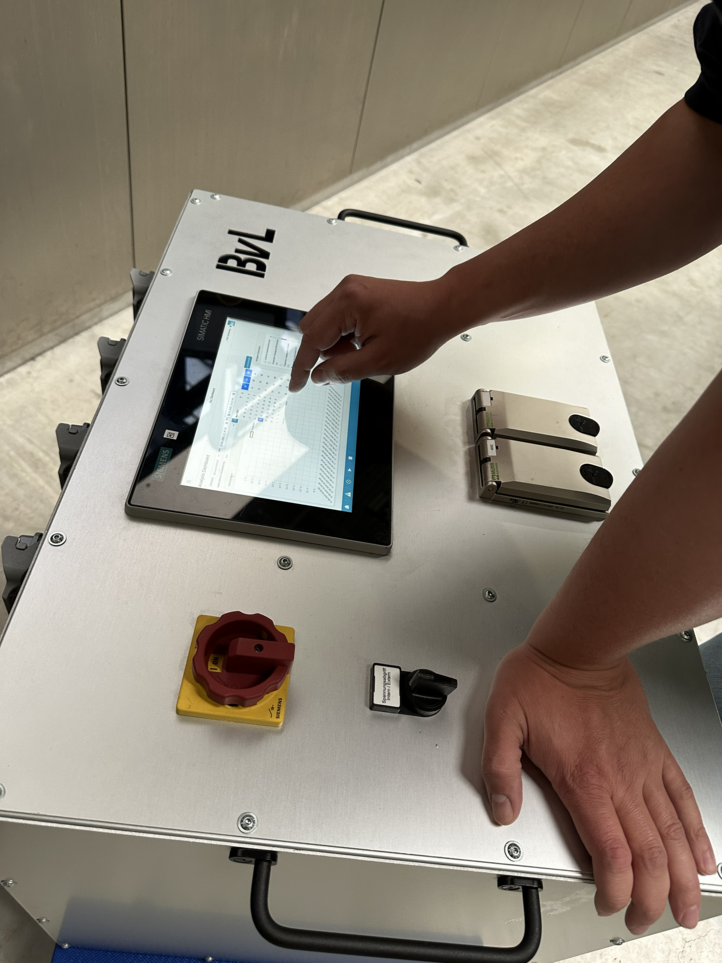
At the heart of the service is Compass©, the mobile sensor case developed by BvL. Its connected sensors record consumption and process data directly at the cleaning system, including electricity, water and compressed air consumption as well as relevant temperature values.
The measurement variables and points that can actually be included depend on the technical conditions of the individual system. Accessibility, existing connections and available signals are therefore checked before measurement begins.
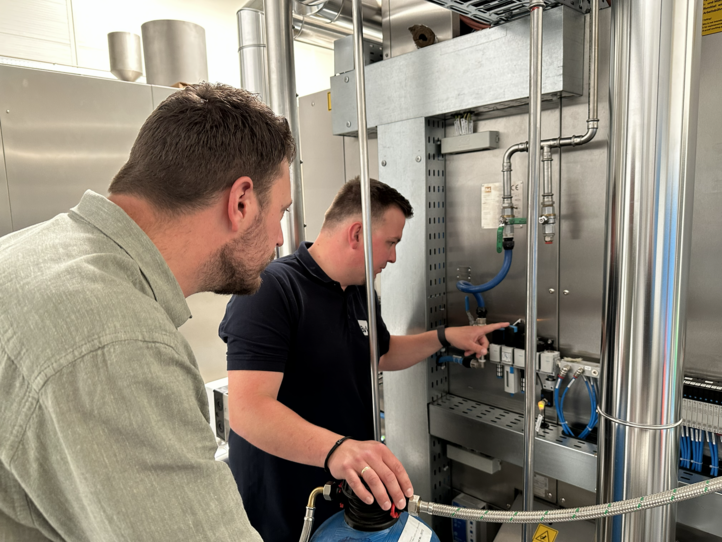
A BvL service technician installs the measurement equipment on site and checks data recording. Measurements are then taken during regular system operation. No permanent installation is required.
Where do consumption peaks occur?
The main benefit lies not only in recording individual consumption values but also in displaying how they change over time. Instead of looking solely at totals or snapshots, consumption and temperature trends become visible throughout the entire measurement period.
This helps identify, for example, unusual electricity consumption, compressed air peaks or recurring consumption patterns. Where the system design, program sequence and available signals permit, the data can be assigned chronologically to individual process stages such as washing, rinsing or drying.
In this way, a simple consumption value becomes meaningful information about actual system operation. Anomalies can be investigated more systematically and potential causes narrowed down. The conclusions that can be drawn depend on the specific application and the level of detail available in the data.
A closer look over two or four weeks
Consumption Monitoring© is available in two options, depending on the application.
Compact – two weeks of consumption transparency
The two-week baseline assessment documents the current energy and utility consumption of a cleaning system. It is particularly suitable for companies seeking an initial overview of consumption or data for audits, energy management and potential modernization decisions.
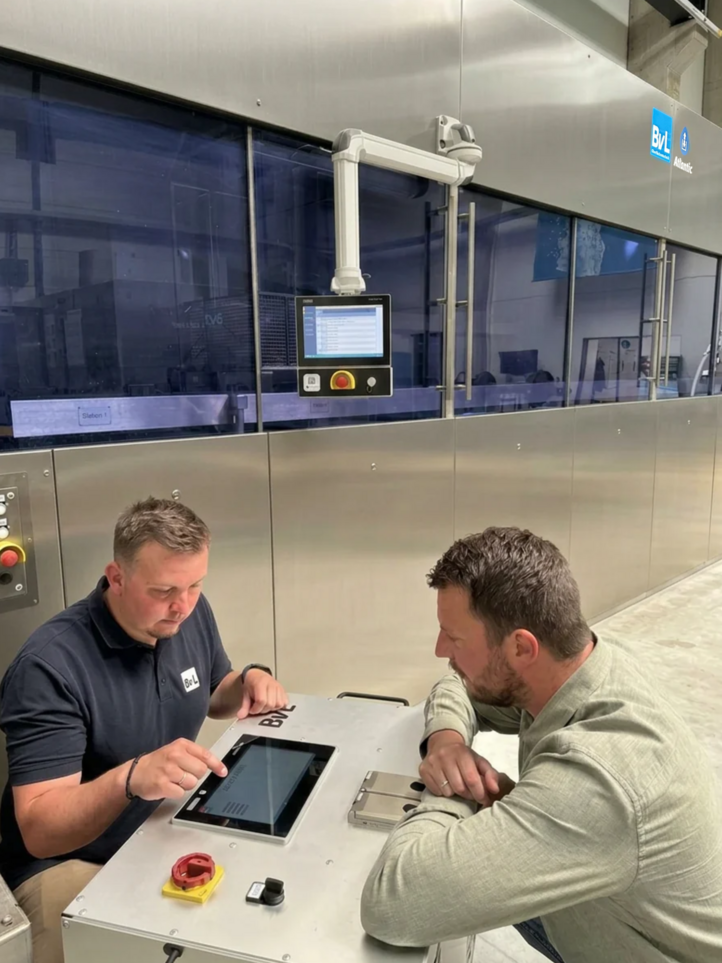
During the measurement period, the currently recorded consumption and temperature values can be viewed on the Compass© panel.
Intensive – four weeks for in-depth analysis
The four-week option allows consumption to be observed over a longer period. It can also reveal how customer-initiated changes to process parameters, such as temperatures, program settings or operating modes, affect consumption.
The system operator is responsible for making and documenting these changes and for ensuring that the required cleaning quality continues to be achieved. Consumption Monitoring© does not automatically assess the cleanliness of the cleaned parts.
From consumption data to practical recommendations
Once measurement is complete, BvL processes the recorded data and provides a measurement report, separate BvL optimization recommendations and the raw data.
The measurement report documents the recorded baseline condition and shows consumption and process trends. The data can be used to examine, for example, unusual consumption peaks, elevated consumption during particular operating states or possible adjustments to process control.
The measurement data also provides a sounder basis for evaluating technical retrofits and modernization measures. The documented baseline values can serve as a reference for future comparative measurements.
Consumption analysis therefore not only provides information about current system operation but also helps prioritize potential measures.
Measure first, then optimize
The actual electricity, water and compressed air requirements of an industrial cleaning system depend on numerous factors. What matters is therefore not just total consumption, but also when and under what conditions resources are used.
Understanding these relationships makes it easier to assess anomalies, evaluate potential savings more systematically and base decisions about future system operation on reliable data.
Consumption transparency is therefore an important first step towards a more efficient cleaning process. The aim is not to promise blanket savings but to identify potential improvements based on real operating data and support informed decisions.
Further information:
https://www.bvl-cleaning.com/en/system-components/consumption-monitoring
Company information:
BvL Oberflächentechnik GmbH is one of Germany’s largest suppliers of water-based industrial cleaning systems. As a systems partner, BvL provides custom solutions—from compact wash systems and filtration/automation solutions through to complex, customer-specific large-scale projects with process monitoring—always complemented by reliable service. As part of a long-established family business with roots dating back to 1860, the owner families in the fifth generation stand for technical excellence, innovation, and absolute reliability. The company currently employs around 170 people. In export markets, BvL holds a strong position with a comprehensive sales and service network in 20 countries.
Contact
BvL Oberflächentechnik GmbH
Grenzstr. 16
48488 Emsbüren
Tel.: 05903 951-60
Fax: 05903 951-90
info@bvl-group.de
www.bvl-cleaning.com
Christine Brühöfner
Marketing
Tel.: 05903 951-509
Fax: 05903 951-90
christine.bruehoefner@bvl-group.de